
NYC Recycling
Requirements
Every NYC business is legally required to recycle. Here's what you need to know — and how Action Environmental makes compliance straightforward.
In New York City, all businesses are required by law (NYC 16 RCNY § 1-10) to recycle paper, cardboard, plastics, glass and metals, and must adhere to separation, set-out and collection requirements. Furthermore, under DSNY's implementation of Local Law 199, also known as Commercial Waste Zones (CWZ), businesses operating in active zones must hire a DSNY-permitted carter to collect their waste and recycling.
We've outlined some recycling compliance basics here, but encourage all customers to visit nyc.gov/sanitation, nyc.gov/commercialrecycling, and nyc.gov/commercialorganics to learn more about all of their compliance obligations in New York City.
Recycling Basics
Recycling plans under NYC regulation MUST COMPLY with one of the following recycling collection methods:
Source-Separated
Recyclables are separated into distinct streams at the point of generation.
Co-Collection
Waste and recyclables are collected together but processed separately at the facility.
Single Stream
All recyclables are mixed together in a single container for collection.
Standard Recycling Materials

Paper & Cardboard
Office paper, newspaper, magazines, catalogs, phone books, mixed paper, corrugated cardboard and boxes.
Metals
Metal materials including cans, aluminum, and steel.

Glass
Glass containers including jars and bottles.

Plastics
Plastics containers and bottles, including those #1–7, bottles, jars, jugs, and rigid plastic
Organics Recycling
Your business may be required to comply with NYC's Commercial Organics Law (Local Law 146). Establishments that may be required to comply include:
- Food Service Establishments
- Retail Food Stores
- Food Preparation Locations
- Catering Establishments
- Temporary Public Events
- Arenas & Stadiums
- Food Manufacturers
- Food Wholesalers
Separation Rules & Bins
Co-mingling recyclables and waste in the same container is PROHIBITED. All recyclable material must be kept separate from all garbage at all times. All garbage and recycling containers must be labeled with the designated material type.
Garbage and recyclables — including paper, plastics, metals, and glass — need to be in separate bins. All cardboard must be broken down, flat stacked, and bound.
For curbside service in NYC, 16 RCNY § 1-02.1 requires that all garbage and organics must be placed out in bins with lids that close completely. Cardboard must be flattened, bundled, and tied. Leave out all waste and recycling for collection within your designated pickup time. For Action customers, your collection occurs overnight between the hours of 7pm – 7am.
Maintain signage in both public collection and storage areas describing how recyclables and waste are collected and separated.
How Many Bins Do You Need?
A business' method of recycling collection will dictate how many bins it needs to maintain at its location(s).
If your business has a single-stream or co-mingled recycling service (you do not separate paper/cardboard from other recyclables), you need one bin for trash and one bin for all recycling.
If your business source-separates your recycling (you separate cardboard/paper from plastics, metals, and glass), you will need one bin for trash, one bin for cardboard/paper, and one bin for plastics, metals and glass.
Special Handling
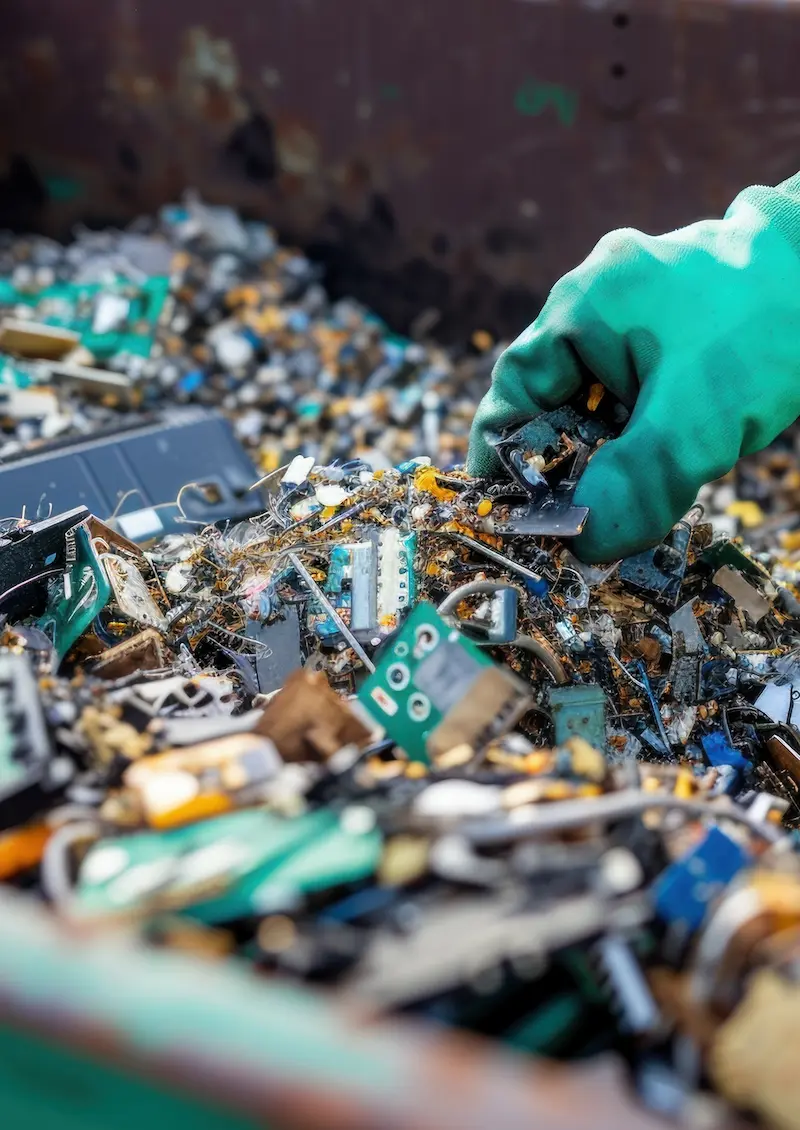
Batteries, electric lamps and mercury-containing devices CANNOT be disposed of with regular waste or recycling. It is DANGEROUS and ILLEGAL to dispose of all rechargeable, Lithium-Ion, and most single-use batteries with trash or recycling.
While "household" alkaline batteries can be put in the trash, it is DANGEROUS and ILLEGAL to dispose of all rechargeable, Lithium-Ion, and most single-use batteries with trash or recycling. We have electronics recycling programs to help you dispose of your old electronic devices.
Fines for Non-Compliance
Failure to comply with recycling rules may result in fines from the DSNY ranging from $50 to $400 per violation. See the full §3-120 Recycling – Sanitation Collection Rules Penalty Schedule.
More Questions?
Action Environmental has over 25 years of experience collecting and processing waste and recycling in New York City and is the most awarded Commercial Waste hauler. We take great pride in being your all-in-one solution for waste management. We serve construction sites, restaurants, retail, hospitals, universities, municipal facilities, and more.
Contact us today with any questions or to start your service!
Safety, Environmental Health & Sustainability
Our families have been in the waste business for generations, and as our customers' needs evolve over the years, so do we as a company. By investing in innovation and technology we are able to serve our customers more efficiently and effectively while reducing the impact on the environment. Maintaining compliance with the ever-changing regulatory requirements and safety best practices is a responsibility we proudly accept. We are committed to doing the right thing for our customers, employees and the environment.